Skinny Pig
- Origin
- Canada (lab origin, 1970s)
- Size
- 9–12 in (23–30 cm)
- Coat
- Hairless (fuzzy nose and feet)
- Lifespan
- 5–7 years
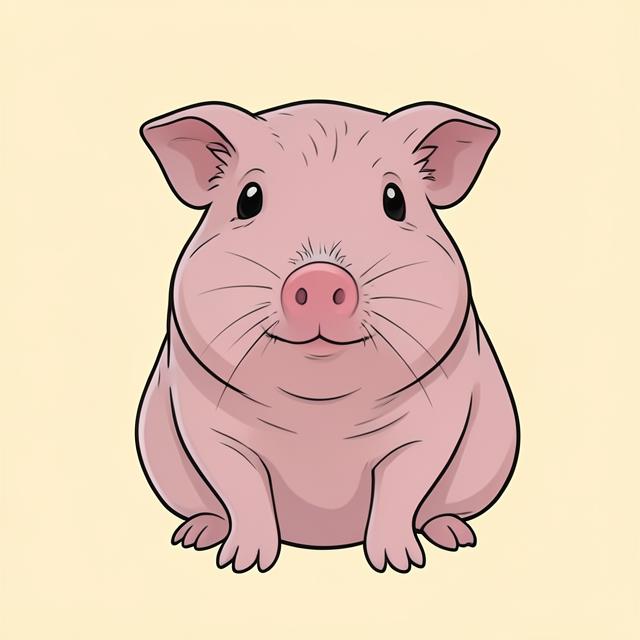
The Skinny Pig is nearly hairless, with soft wrinkled skin and usually a little fuzz on the nose and feet. Originally bred for dermatology research, they won over the pet world with their warm, people-loving personalities.
Hairless means special care: Skinny Pigs get cold easily, need draft-free housing, eat more than furred pigs to stay warm, and require gentle skin care. In return you get a bold, affectionate companion who loves to snuggle under a fleece with you.
Skinny Pig at a glance
- Size
- 9–12 in (23–30 cm)
- Adult weight
- About 1.5 to 2.5 lb (700 to 1,100 g) as an adult
- Lifespan
- 5–7 years
- Care difficulty
- Advanced
Coat and grooming
- There is no coat to brush, but the skin needs attention. Check it every few days for dryness, flaking, redness or small scratches.
- If the skin looks dry, ask an exotic vet before using any lotion. Many human products are not suitable for guinea pigs.
- Use soft, dust-low bedding such as fleece liners, and remove sharp hay stalks or rough hideout edges that could scratch bare skin.
- Bathe only when truly needed, with lukewarm water and a vet-approved small animal shampoo, then dry thoroughly and keep warm.
Health risks to watch
- Cold sensitivity: without fur they lose body heat quickly, so keep the room steady at a comfortable indoor temperature and away from drafts.
- Sunburn and overheating: avoid direct sunlight through windows and outdoor time in strong sun.
- Skin injuries and irritation from rough surfaces or cage mates who nibble.
- Higher energy needs: they often eat more hay and food to stay warm, so watch weight weekly.
- Like all guinea pigs, they need daily vitamin C and can develop dental or respiratory problems.
This is general information, not veterinary advice. If you notice a change in eating, breathing, droppings or behavior, contact an exotic vet.
Who is it best for?
- Indoor homes with a stable temperature all year
- Owners with mild fur allergies (they still produce dander and saliva, so they are not allergy-free)
- People who enjoy cuddly, very social pets and daily skin checks
Probably not ideal for
- Outdoor hutches or cold, drafty rooms
- Homes where the pig would be in strong sunlight
Skinny Pig questions
Are Skinny Pigs hypoallergenic?
No. They have little fur, which can help some people with mild allergies, but they still produce dander, saliva and urine proteins that trigger allergies. Spend time with one before adopting.
How long do Skinny Pigs live?
Most live around 5 to 7 years with good housing, a warm room, a hay-based diet and regular checks with an exotic vet.
Do Skinny Pigs need clothes?
Usually not. A warm room, soft fleece bedding and cozy hideouts are better and safer than clothing, which can cause overheating or rubbing.
Do Skinny Pigs eat more than other guinea pigs?
Often yes. They burn more energy to stay warm, so unlimited hay and a steady supply of fresh vegetables matter. Track their weight weekly.
Guinea pig care guidance, made for cavies
Wheeky: Guinea Pig Identifier
- Photo breed identification in seconds
- Symptom checker with urgency guidance
- Food Scanner: harmful foods, vitamin C and serving guidance
- Sound Translator and cage setup guidance
- Poop & Pee Checker for care observations, not diagnosis
- Save a profile and history for each pig
Free to download on iPhone and iPad. Guidance only, never a replacement for an exotic vet.