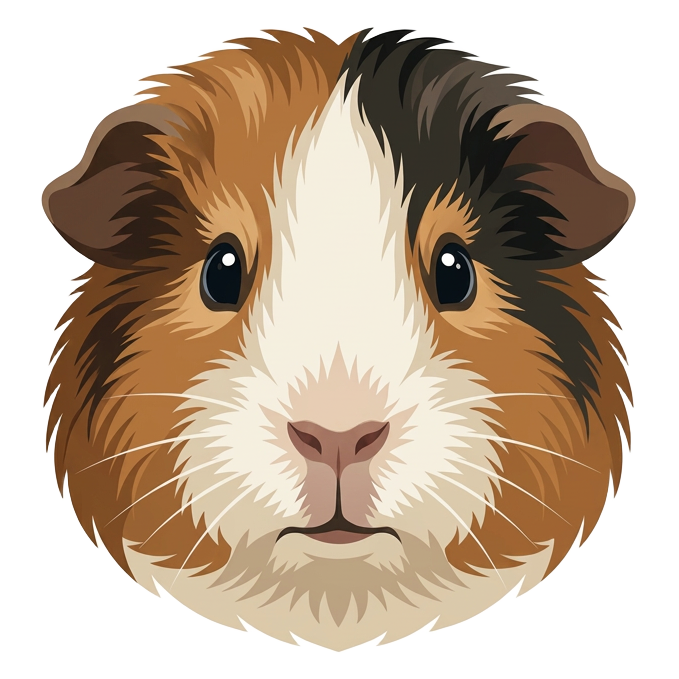

Himalayan Guinea Pig
- Origin
- South-East Asia (breed development)
- Size
- 8–12 in (20–30 cm)
- Coat
- Short, white with dark points
- Lifespan
- 5–7 years
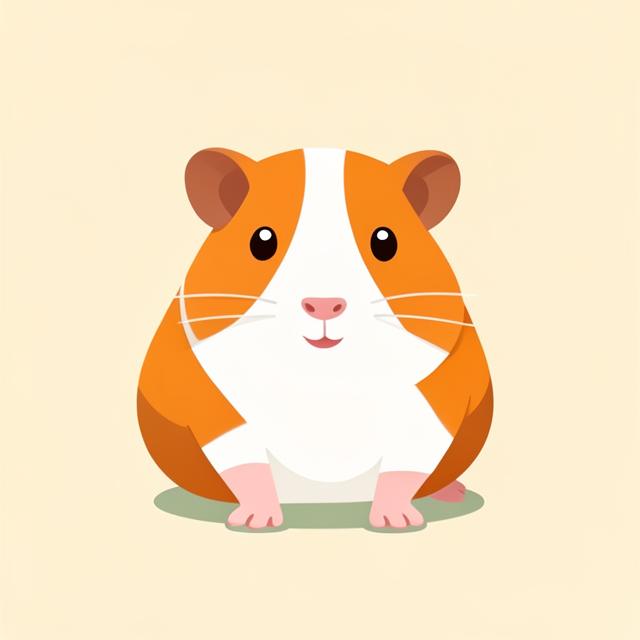
Himalayans are the Siamese cats of the guinea pig world: a white body with dark 'points' on the nose, ears, and feet. Fascinatingly, the points are temperature-sensitive, babies are born pure white, and the dark coloring develops in cooler parts of the body as they grow.
They are gentle and can be shy at first, but bond deeply with patient owners. Keep them out of strong direct sun to preserve their contrast.
Himalayan Guinea Pig at a glance
- Size
- 8–12 in (20–30 cm)
- Adult weight
- Adult guinea pigs commonly weigh about 700 to 1,100 g (1.5 to 2.5 lb); this is not a breed-specific target
- Lifespan
- 5–7 years
- Care difficulty
- Intermediate
The size and lifespan above are approximate, not guarantees. Care difficulty describes grooming workload, not personality. Individual temperament varies, and every breed needs daily care, suitable companionship and veterinary support.
Coat and grooming
- Brush the short coat gently about once a week and check the skin for redness, parasites or missing hair.
- Spot-clean a soiled area as needed rather than bathing to keep the white coat looking bright.
- Check nails, feet and the rear regularly, and maintain clean, dry bedding.
- Keep the pig at a comfortable indoor temperature. Never chill a Himalayan or place it in direct sun to change the color of its points.
Health risks to watch
- All guinea pigs can overheat in direct sun or hot housing. Temperature safety matters more than maintaining dark points.
- Persistent eye discharge, squinting or breathing changes need a vet assessment; coat color is not a diagnosis.
- Monitor eating, droppings and weekly weight for dental or other health changes, as for every breed.
- Seek urgent veterinary help for loss of appetite or difficulty breathing. These are not expected features of a shy pig.
This is general information, not veterinary advice. If you notice a change in eating, breathing, droppings or behavior, contact an exotic vet.
Who is it best for?
- Owners wanting a short coat and able to provide stable, comfortable housing
- Patient families who let an individual pig settle in at its own pace
- Beginners who understand that color does not determine care needs or personality
Probably not ideal for
- Anyone planning to manipulate room temperature to intensify the coat markings
- Homes with unprotected direct sunlight or poorly controlled heat
Himalayan Guinea Pig questions
Why do Himalayan guinea pigs have dark points?
Their pigment pattern is temperature-sensitive, so the cooler extremities develop darker markings. This is a coat-color feature, not a reason to keep a pet cold.
Do Himalayan guinea pigs need more grooming?
Their short coat generally has similar grooming needs to other short-haired pigs. The site's intermediate label should not be read as a need for long-coat grooming or special medical treatment.
Should I put my Himalayan in the sun to change its color?
No. Avoid direct sun and unsafe temperatures. Provide comfortable housing regardless of how dark the points look.
Are Himalayan guinea pigs always shy?
No. Confidence varies between individuals. Give them hideouts, compatible companionship and calm, predictable handling rather than assuming temperament from color.
Sources and further reading
These references cover breed and coat identification, grooming and general guinea pig health. Health watch points are not a claim that this breed is uniquely prone to those conditions.
Guinea pig care guidance, made for cavies
Wheeky: Guinea Pig Identifier
- Photo breed identification in seconds
- Symptom checker with urgency guidance
- Food Scanner: harmful foods, vitamin C and serving guidance
- Sound Translator and cage setup guidance
- Poop & Pee Checker for care observations, not diagnosis
- Save a profile and history for each pig
Free to download on iPhone and iPad. Guidance only, never a replacement for an exotic vet.